News
News Editorial Board
 Apr. ‘ 26
 Subscribe
Induction Training Programme for Newly Recruited Technical Officials 2026-NIC Chhattisgarh
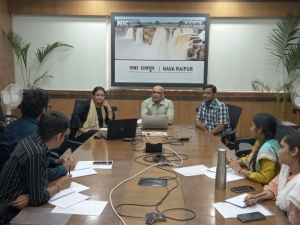
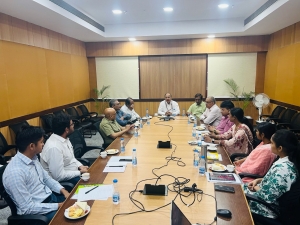
The National Informatics Centre (NIC), Chhattisgarh, welcomed its newly recruited technical officials through a carefully curated two-day Induction Training Programme held from March 19 to March 20, 2026. Designed not merely as an introduction but as a grounding in purpose, the training served as a meaningful entry point into the life and work of NIC—where public service meets digital transformation.
Day1– Inaugural Session | March 19, 2026
The programme commenced with a warm welcome, chaired by Shri Tej Narayan Singh, SIO and DDG, in the presence of Heads of Departments (HODs) and the newly joined officials. The session set the tone for the days ahead— one of learning, exchange, and alignment with NIC’s larger mission.
The inaugural remarks reflected:
1- A heartfelt welcome and congratulations to the new entrants.
2- A broad overview of NIC’s mission, vision, and values, reinforcing the Centre’s role as a technology partner to the government.
3- A brief journey through NIC’s history, its evolving priorities, and flagship initiatives across the nation.
4- A clear articulation of the roles and expectations from NIC officers, especially at district-level centres where digital governance finds its most direct expression.
Administrative Orientation
The next segment brought focus to the practical workings of NIC. Shri Pankaj Samuel Gajbhiye Scientist-F & DDO along with his team, conducted in-depth sessions on essential administrative procedures that guide daily functioning. Topics included:
1- Rules and regulations governing general administration.
2- Introduction to the digital portal https://digital.nic.in, and its relevance in internal processes.
3- Preparation of note sheets, an essential tool in official communication.
4- Guidelines concerning tours, leave, and medical policies, along with navigation of related departmental websites.
5-Management of imprest funds, TA/DA bills, telephone and newspaper reimbursements, and other procedural elements.
These sessions aimed to demystify administration and instill clarity in formal operations, ensuring that officers step into their roles with both competence and confidence.
Departmental Interactions
As the programme unfolded, officers had the opportunity to engage directly with Heads of Departments. These sessions were more than just presentations—they were windows into the diverse domains NIC works in. Each department walked participants through its functions, current projects, and collaborative frameworks, helping the new officials understand where their own contributions would fit into the broader ecosystem.
Technical Training Modules
The next segment brought focus to the practical workings of NIC. Shri Lal Bahadur Singh, Scientist-F & HOD along with his team
1- Complementing the administrative and departmental exposure was a focused set of technical training sessions. Officers were introduced to:
NIC’s network infrastructure—its architecture, security protocols, and connectivity models.
2- Tools, frameworks, and platforms that power e-Governance initiatives.
These hands-on sessions were designed to equip participants with foundational skills and technical awareness needed for their assignments in the field.
Valedictory Session | March 20, 2026
The training concluded with a valedictory session, which served not only as a closing but as a reflection on the shared purpose that binds all NIC officers. Shri T. N. Singh, State Informatics Officer (SIO), Chhattisgarh, addressed the gathering, offering thoughtful guidance to the recruits and encouraging them to approach their responsibilities with dedication, curiosity, and integrity.
The programme owed its seamless execution to the Training Division, led by Shri Satyesh Kumar Sharma, Technical Director, and Smt. Jyoti Sharma, Deputy Director, whose efforts ensured that every session was both engaging and meaningful.
Appreciation was also extended to all Heads of Departments (HOD) for their insightful contributions and to the administrative team for their steady support throughout the event. Most importantly, it was the active involvement, questions, and enthusiasm of the newly recruited officials that gave the programme its energy and ensured its success.
With this induction, a new chapter begins—not just for the officers, but for NIC itself, as it continues to grow with every fresh mind that joins its mission to digitally empower governance in our nation.
 Flipbook
 PDF (4.5 MB)
 Website