

NIC Assam’s Sewa Setu Grievance Management Framework is an n8n-powered agentic AI solution that automates grievance classification, routing, and resolution. Using a fine-tuned RoBERTa model for intent inference, the system enables Zero-Touch payment resolution, intelligent service-delay monitoring, and automated technical ticketing. The framework improves triage accuracy, reduces resolution time, strengthens SLA compliance, and supports proactive, citizen-centric digital governance.
Traditional grievance management processes rely heavily on manual triaging and static rule-based workflows. This creates significant “friction points” where mismatches between user-selected categories and true intent lead to incorrect routing, processing queues, and SLA breaches. In citizen-centric service delivery platforms such as Sewa Setu (sewasetu.assam.gov.in), which currently handles over 10,000 applications daily, the timely and efficient resolution of high-volume grievances remains a critical challenge with substantial social impact.
At this scale, grievances generated across multiple channels, including web portals, email, and call centres, create a continuous stream of unstructured data.
To address this, NIC Assam deployed an agentic AI-driven grievance management framework using n8n as the central orchestration layer. The framework leverages a BERT-based transformer model fine-tuned on the Sewa Setu grievance dataset to perform intent inference by accurately interpreting unstructured grievance text and identifying its underlying context, while ensuring data residency within government infrastructure. This enables the dynamic routing of cases into predefined execution workflows.
Through this framework:
- Payment-related grievances are handled via “Zero-Touch” auto-resolution; the system queries gateways to validate and close successful transactions without human intervention.
- Service-delay cases are aggregated into 24- hour batches and automatically dispatched for departmental review and monitoring.
- Technical issues are automatically assigned to specific developers and converted into trackable tickets in project management platforms such as Jira or Taiga.
This orchestration significantly reduces manual effort with a triage accuracy of over 90%, and shifts the operational focus from reactive redressal toward proactive service-level governance.
Proposed Solution
The framework replaces traditional linear, rule-based handling with a centralised agentic orchestration layer built on n8n. n8n serves as a low-code workflow engine that coordinates intake, intelligent decisioning, and downstream actions across disparate systems. By integrating seamlessly with ticketing platforms, communication channels, and external APIs, the framework remains highly configurable without requiring heavy custom code.
The solution moves beyond simple automation by combining AI-based intent inference with dynamic execution. While routine cases are resolved autonomously, complex exceptions are routed to the appropriate teams with complete context and auditability.
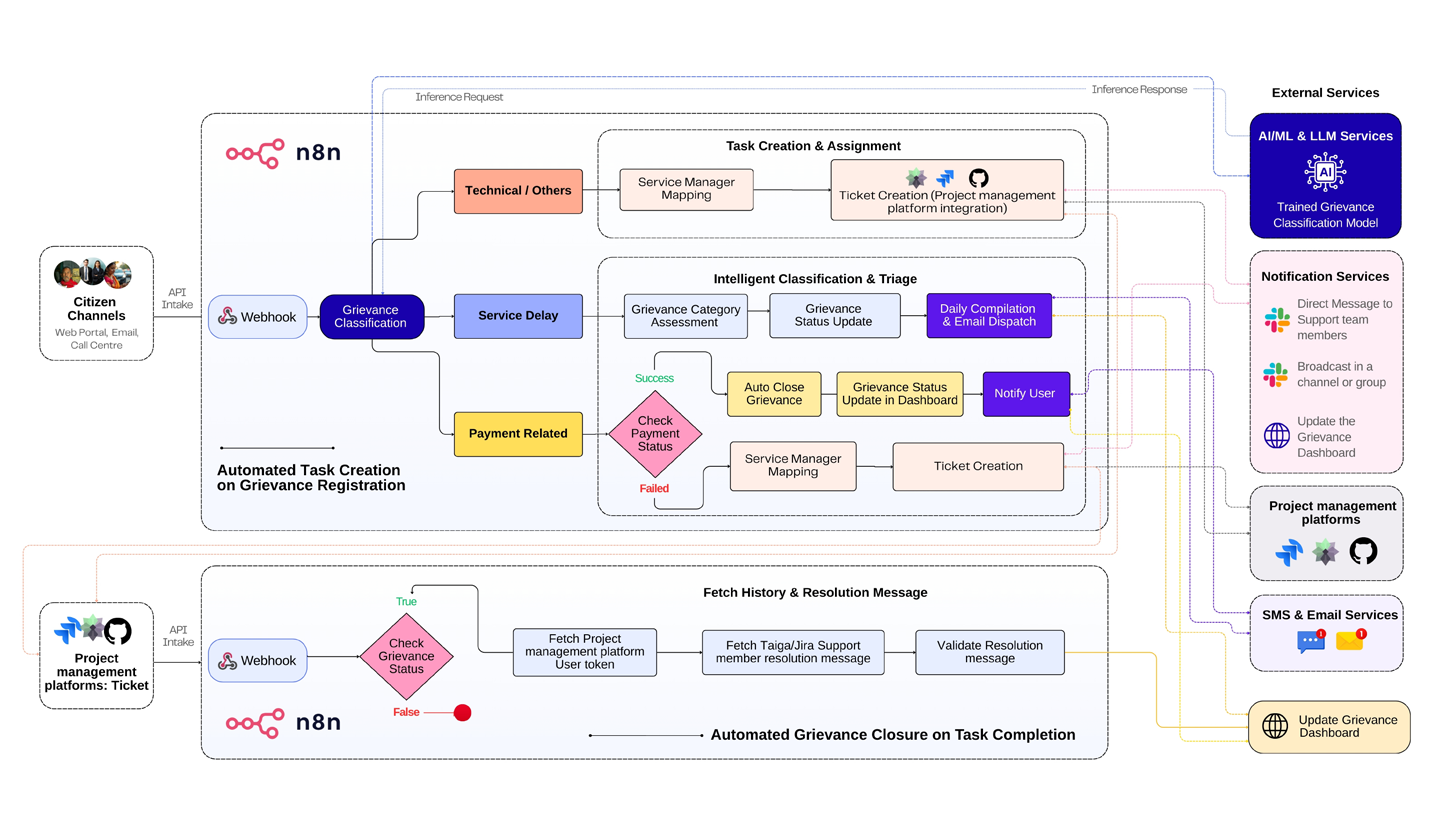 Fig: 8.3 : Grievance Management Framework Architecture
Solution Approach
The framework is deployed through a standardised four-step process: API Handshake, Payload Mapping, Logic Configuration, and Dashboard Synchronisation. The workflow, as depicted in Figure 1, is triggered via a secure webhook the moment a grievance is registered, initiating an automated processing pipeline across four distinct layers.
Grievance Preprocessing and Cognitive Classification
At the cognitive layer, a RoBERTa, a robustly optimised BERT pre-trained model, fine-tuned on the Sewa Setu grievance dataset, processes raw grievance text to classify it into three core categories: payment-related, service delay, and technical grievances.
- Intent Inference: The model is trained on historical data to recognise common terminology and failure scenarios, allowing it to infer true user intent even when dropdown selections are incorrect.
- Data Residency: Local execution ensures that sensitive government data remains within secure infrastructure while delivering near-real-time insights.
- Dynamic Decisioning: This layer ignores flawed user inputs and feeds accurate context into the orchestration flow, where routing and actions are determined dynamically.
Multi-Path Workflow Execution
The Orchestration Layer manages decision logic, retries, and state tracking for three primary paths:
- Payment-related (Zero-Touch): The system queries payment gateways to verify transaction status. Successful transactions are auto-closed with SMS notifications sent to the citizen, while failed or ambiguous cases are escalated to service engineers as trackable tickets in project management platforms such as Jira or Taiga for further investigation.
- Service Delays (Intelligent Aggregation): Instead of individual alerts, these cases are batched over 24 hours. A scheduled morning brief is emailed to departments, ensuring structured follow-up without notification fatigue.
- Technical Issues (Exception Routing): Technical issues are mapped directly to service engineers. Structured tickets are created in Taiga or Jira, and stakeholders are instantly alerted via Slack or direct messaging.
Synchronization, Resilience, and Dashboarding
The action layer ensures that the “black hole” of ticketing is eliminated through constant synchronisation:
- Automated Closure: The system monitors external platforms; when an engineer closes a ticket, n8n fetches the resolution comments and updates the original grievance record in real time.
- Process Resilience: State persistence and auto- retry logic ensure that no data is lost during external system downtimes.
- Unified Analytics: A Grievance Analytics Dashboard, as shown in Figure 2, provides a consolidated view of total cases (e.g., 1,722 grievances received for the month of April 2026), resolution rates, and category-level trends. This visibility supports proactive intervention by identifying systemic failures before they escalate.
| Key Performance Indicator | Legacy Manual Process | Agentic Framework |
|---|---|---|
| Triage Accuracy | ~95-100% (Manual) | >94% (AI-Verified) |
| Mean Time to Resolution | Days/Weeks | Minutes (Routine) / 24h (Complex) |
| Auto-Resolution Rate | none | High (Zero-Touch) |
| Escalation Rate | High | Significantly Reduced |
| SLA Compliance | Reactive | Proactive & Automated |
Performance Impact and Key Metrics
Implementation at Sewa Setu has fundamentally shifted operational focus by eliminating manual triaging. The agentic framework has replaced rule-based bottlenecks with intelligent orchestration, as evidenced by the following performance gains.
Controls and Reliability
The framework is engineered for process resilience, moving beyond simple automation to ensure government-grade reliability. Key controls include:
- SLA-Based Escalation: Automated monitoring triggers escalations if response timelines are breached.
- Configurable Routing: Department-specific logic and ownership rules can be updated within n8n without modifying the core codebase.
- Multi-Channel Notifications: Stakeholders receive alerts via email, Slack, SMS, and dedicated framework dashboards.
- State Persistence: Built-in persistence ensures that if an external system fails, the workflow resumes from the last recorded state, ensuring zero data loss.
Way Forward
The framework represents a shift toward predictive governance. By decoupling routine triaging from human administrative bandwidth, the state can focus on high-value citizen interventions. This modular, n8n-based architecture is designed for rapid horizontal scaling, providing a blueprint for intelligent grievance management across all state-level digital portals in India.
- Edited by:VINOD KUMAR GARG
Author / Contributor

Pranjal Bezbaruah Dy. Director General & SIO sio-asm[at]nic[dot]in

Rahul Deka Scientist-D r.deka[at]nic[dot]in
- Tag:
- Internet
- Technology
- eGov
- Tech
State Informatics Officer
NIC Assam State Centre
‘C’ & ‘D’ Wing, First Floor, Satpura Bhawan
Bhopal, Madhya Pradesh – 462004
Share